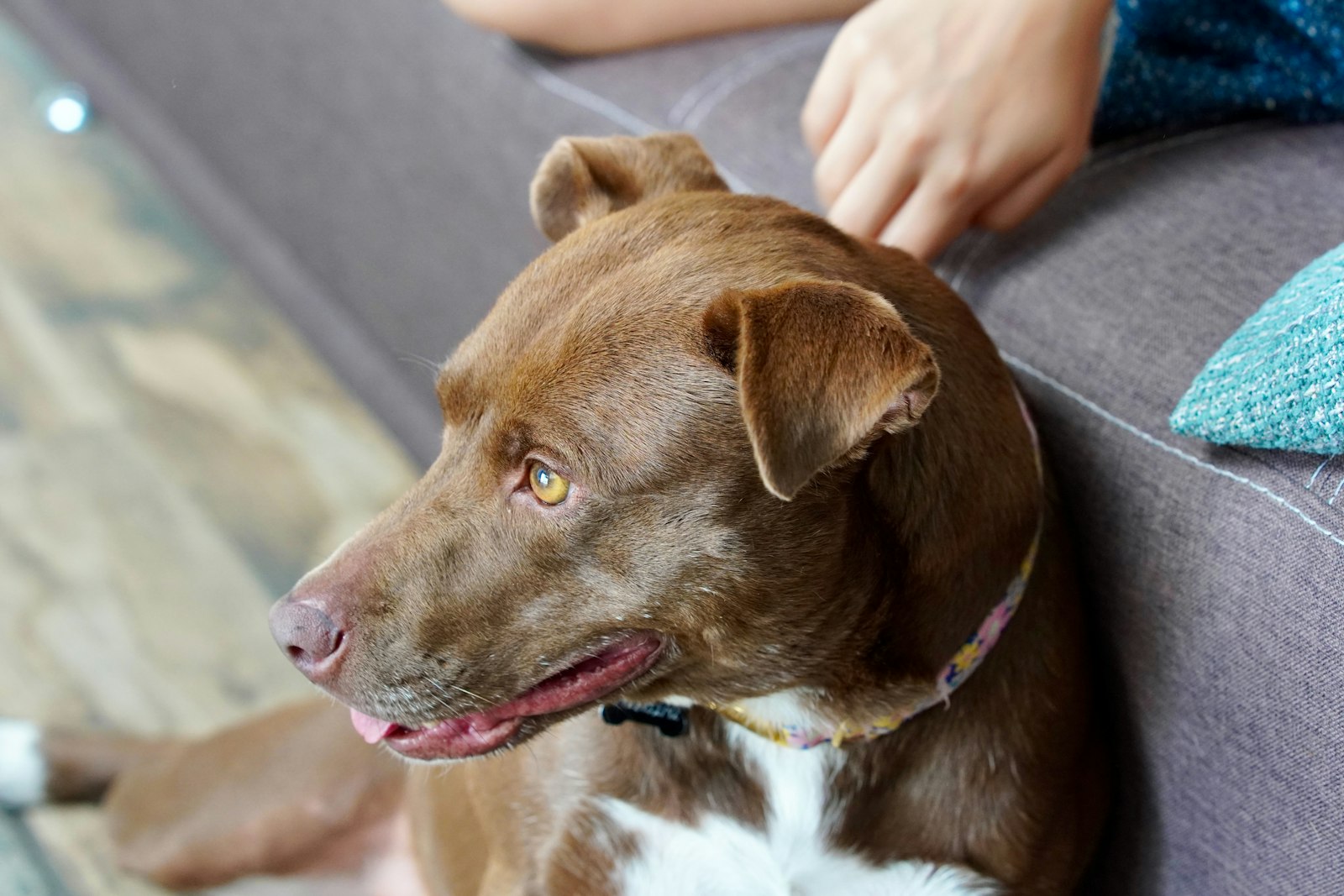
If you share your life with an anxious or reactive dog, dog daycare can sound like either a great solution or a terrible gamble. Both reactions make sense.
Some dogs do better with the right daycare setup. Others find group care too stimulating, too social, or too unpredictable. The real question is not whether daycare is good or bad in general. It is whether a particular daycare environment is a good fit for your dog.
That matters in Mountain View, where many dog owners are balancing work, commuting, apartment or condo living, and full weekday schedules. If your dog struggles when left alone or seems restless by the end of the day, daycare may seem like an easy answer. But for sensitive dogs, the better question is this: will daycare help your dog feel more secure and stable, or more stressed and overwhelmed?
Anxiety and reactivity are not the same thing
These terms often get lumped together, but they are not interchangeable.
Anxious dogs may worry about noise, novelty, handling, separation, fast movement, or unfamiliar environments. Reactive dogs may bark, lunge, spin up quickly, or have a hard time calming down once something sets them off. Some reactive dogs are fearful. Some are frustrated greeters. Some are selective about other dogs. Some are mainly overwhelmed by chaos and crowding.
That distinction matters because daycare asks a lot from dogs. Even a well-run facility has arrivals, departures, gates opening and closing, new handlers, movement, noise, and social pressure. A dog who struggles in those situations is not a bad dog. It may simply mean standard open-play daycare is not the right match.
It is also common for a dog to do well in one setting and struggle in another. A dog may be fine on walks, fine with one known dog friend, and still have a hard time in a full group-care environment. That is not inconsistency. It is context.
When daycare might help an anxious dog
Daycare can help some anxious dogs, especially when the issue is mild social uncertainty, boredom, or stress from being home alone all day.
A shy but curious dog may gain confidence in a quiet, well-managed daycare with small groups and careful introductions. A dog who gets mildly stressed during long, empty weekdays may do better with a short, structured outing that includes supervision, rest, and low-pressure activity.
But structure matters a lot here. Daycare is more likely to help an anxious dog when it includes:
- careful screening before admission
- slow introductions instead of immediate group immersion
- small or compatible play groups
- real rest breaks during the day
- staff who can recognize canine stress signals
- a willingness to say a dog needs a different plan
Without those things, daycare can turn into something a dog simply endures.
When daycare can make things worse
For many reactive dogs, daycare is not the best first step.
If your dog is easily overwhelmed, barks or lunges at unfamiliar dogs, guards space, panics when over-aroused, or has trouble settling afterward, a busy daycare may make the problem worse. More exposure does not always mean better exposure.
One of the most common misunderstandings is the idea that frequent contact with other dogs will automatically help a reactive dog get used to them. Sometimes the opposite happens. Repeated stress without enough distance, control, or recovery can make a dog more tense and more practiced at reactive behavior.
This is especially true in all-day open-play settings. Those environments can be too socially demanding for dogs who need more space, more predictability, and more guidance. Even if a dog is not getting into fights, they may still be having a hard time.
A dog who spends the day pacing, avoiding other dogs, clinging to handlers, getting snappy, or staying in a constant state of arousal is not benefiting just because they come home exhausted.
Signs your dog may not be a good daycare candidate right now
Many owners focus on whether a daycare will accept their dog. That is understandable, but acceptance and suitability are not the same thing.
Your dog may not be a strong daycare candidate right now if they:
- react strongly on leash when they see other dogs
- have a hard time recovering after exciting or stressful events
- seem intensely worried around unfamiliar dogs or people
- guard toys, food, space, or handlers
- become frantic instead of playful in social settings
- shut down in busy environments
- come home from dog-heavy outings more agitated instead of more settled
A recent move, adoption, illness, injury, or major routine change can matter too. In a place like Mountain View, some dogs are already dealing with a lot of stimulation from apartment living, traffic, dense neighborhoods, and packed routines. Adding group daycare on top of that is not always helpful. Sometimes it is just one more thing the dog has to manage.
What to look for in a Mountain View daycare
If you are considering dog daycare in Mountain View for an anxious or reactive dog, the intake process should tell you a lot.
A thoughtful daycare should not treat every dog like they belong in the same room. Staff should ask detailed questions about your dog’s behavior, social history, triggers, handling comfort, and recovery patterns. They should be comfortable talking plainly about anxiety and reactivity, not brushing those concerns aside.
Good questions to ask include:
- How do you evaluate anxious or reactive dogs?
- Do you offer gradual introductions or trial visits?
- Are dogs grouped by play style and arousal level?
- How do you handle dogs who need more space or more breaks?
- What signs tell you a dog is not thriving here?
- When would you recommend against daycare?
The answers matter, but so does the tone. A good facility will usually sound realistic, not overly reassuring. It should not promise to fix behavior problems. It should not act like every concern will disappear once the dog settles in.
Convenience matters, of course. Mountain View owners may be comparing options near home, near work, around Castro Street, or on the way to neighboring cities. But with an anxious or reactive dog, fit matters more than driving time.
Alternatives that may be a better fit
Sometimes daycare is simply not the right tool, and that is okay.
Many anxious or reactive dogs do better with a more individual plan, such as:
- a dog walker
- one-on-one pet sitting
- a training-focused day program
- enrichment visits at home
- shorter outings instead of full group days
- behavior work with a qualified trainer
For some dogs, a calmer weekday routine is more helpful than a highly social one. A quiet walk, a sniff-heavy outing, a food puzzle, or a midday visit from someone the dog knows may do more for emotional stability than hours around unfamiliar dogs.
It is also worth being careful about chasing fatigue. A tired dog is not always a thriving dog. Sometimes that dog is just depleted.
If you try daycare, start smaller than you think
If your dog seems like a possible candidate, start conservatively. Skip the urge to book multiple full days right away.
A trial visit, short evaluation, or half day is often a better place to begin. Then watch what happens after pickup. A good daycare experience should not only look fine in the moment. It should leave your dog recovering well afterward.
Helpful signs include:
- your dog seems interested, not panicked, at drop-off
- staff can describe the day in specific terms
- your dog comes home pleasantly tired and settles normally
- behavior at home stays stable or improves
- your dog does not seem more reactive the next day
Concerning signs include:
- frantic excitement or obvious reluctance at drop-off
- vague feedback from staff
- excessive panting, shut-down behavior, or nonstop motion
- coming home wired, clingy, irritable, or unable to settle
- worsening reactivity on walks or around triggers afterward
Some dogs also do better with very limited attendance, such as once a week or less. More is not always better.
The goal is not to make daycare work at all costs
This can be the hardest part for owners to accept. The goal is not to prove that your dog can handle daycare. The goal is to build a routine your dog can handle well.
For some anxious or reactive dogs in Mountain View, that routine may include a carefully chosen daycare with small groups, skilled staff, and realistic expectations. For many others, the better answer will be something quieter and more individualized.
That is not settling. It is paying attention to what your dog is actually telling you.
Dog daycare can be useful, but it is not a universal behavior fix. For sensitive dogs, the best choice is usually the one that protects their emotional balance, not the one that sounds most convenient or most social.
If you are trying to decide whether daycare is right for your anxious or reactive dog, focus less on the label and more on the match. The right environment can help. The wrong one can overwhelm. Knowing the difference is what really helps your dog.